


An honest ranking — no sugarcoating, no scare tactics — just what you actually need to know.
Someone asks me some version of this question pretty regularly: where should I go for my first solo trip? And the truthful answer is always that it depends on the person. On how you handle not understanding the menu. On whether getting lost energizes you or exhausts you. On how comfortable you are sitting in a restaurant alone without feeling like everyone in the room is quietly judging your life choices.
But “it depends” isn’t useful when someone is genuinely trying to decide where to book a flight. So here’s my honest ranking — every country I’ve visited, ordered from easiest to most challenging for solo travel. “Easiest” doesn’t mean best. Some of the most memorable travel happens in the places that ask the most of you. And “challenging” doesn’t mean dangerous — it usually just means you need to arrive a little more prepared and a little more flexible. This is just about what to expect going in, so you can go in ready.
1. Japan
The gold standard for solo travel
Japan should feel harder than it does. The alphabet is completely different — actually three different writing systems, which sounds terrifying before you arrive and turns out to matter less than you’d think. The customs around eating, tipping (you don’t — please don’t, it can actually cause offence), behaviour on public transport, removing your shoes, the specific etiquette of temple visits — all of it is unlike what most Western travellers are used to. And yet Japan consistently tops the list of best countries for solo travel, and it earns that reputation every single time.
The country is extraordinarily well-organized in a way that’s hard to fully appreciate until you experience it. Trains run precisely on time — not “roughly on time,” not “usually on time,” but on time in a way that will ruin your relationship with other public transit systems for years. Stations have clear English signage alongside Japanese. Google Maps works flawlessly. Convenience stores — 7-Eleven, Lawson, FamilyMart, and they are genuinely everywhere — are open around the clock and sell hot food, onigiri, drinks, toiletries, phone chargers, SIM cards, and basically anything you forgot to pack. The streets are clean and safe. If you ask for directions, people will often walk you to where you need to go rather than just pointing.
Solo dining, which is one of the bigger low-key anxieties for first-time solo travellers, is essentially a non-issue in Japan. Ramen bars have individual counter seats, sometimes with small wooden dividers between them, built specifically so people can eat alone comfortably. Conveyor belt sushi is perfect for one. You can walk into most restaurants alone and be seated without a flicker of awkwardness from anyone. The cultural acceptance of solitude in Japan is real and it is one of the most quietly liberating things about travelling there.
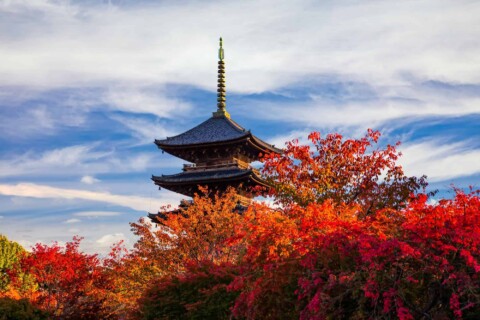
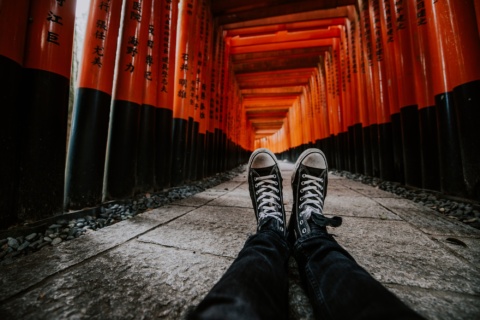
There’s also just so much to do independently. Tokyo alone could keep you occupied for weeks — the neighbourhoods each have their own distinct character, from Shimokitazawa’s vintage shops and live music venues to Yanaka’s old-Tokyo atmosphere to Akihabara’s sensory overload. Kyoto’s temples and shrines are best explored at your own pace anyway, ideally early in the morning before the tour groups arrive. Day trips to Nara, Hakone, Hiroshima, and Osaka are all easily managed by train.
The main thing to prepare for is cost. Japan is not budget backpacker territory, particularly in the cities. Accommodation, transport passes, and eating at sit-down restaurants add up. That said, convenience store meals and standing sushi bars keep food costs manageable if you need them to. The JR Pass, if you’re travelling between multiple cities, is worth doing the math on before you buy — it’s not always the cheapest option depending on your route.
For ease of navigation, safety, solo-friendly culture, and sheer richness of things to see and do, Japan is the easiest recommendation on this entire list.
2. Germany
Germany is probably the most underrated country on this list for solo travel, and it doesn’t get the credit it deserves. It lacks the romantic cachet of France and the drama of Italy, so it doesn’t feature as heavily in the “dream destination” conversations. But in terms of what actually makes solo travel work — reliable infrastructure, widespread English, affordable prices, a culture that doesn’t make solitude feel strange — Germany delivers on all of it.
Berlin is a genuinely excellent solo city. It has a particular openness to it, a sense of everyone doing their own thing without much interest in what you’re doing in yours, which creates a kind of freedom that’s hard to find in more socially intense cities. People sit in coffee shops alone for hours. They go to galleries alone, wander markets alone, eat alone at the long communal tables in beer halls without anyone thinking twice about it. Berlin’s history is also dense and fascinating in a way that rewards independent exploration — the Memorial to the Murdered Jews of Europe, Checkpoint Charlie, the East Side Gallery, the DDR Museum — these are all experiences that are arguably better processed at your own pace.
Munich is a different character entirely — more polished, more expensive, more traditionally tourist-friendly in a way that makes it easy to navigate but slightly less interesting to wander. It’s beautiful, particularly the old town, and the English Garden is one of the great city parks in Europe. But for solo travel energy, Berlin wins.
Transport across the country is excellent. The German rail system connects cities efficiently and English is spoken in stations and on platforms. Accommodation ranges from well-run hostels with strong social atmospheres (good if you want to meet people) to affordable hotels and Airbnbs (good if you don’t). Food is straightforward and satisfying — sausages and schnitzel get the jokes, but German cuisine is more varied than its reputation and markets and beer halls are among the most comfortable solo eating environments anywhere in Europe.
Germans are direct rather than effusive, which can initially read as unfriendly to travellers used to warmer first impressions. It isn’t unfriendliness — it’s efficiency and a cultural respect for not being performatively warm with strangers. Once you understand that, it’s actually a relief. Ask for help and you’ll get a clear, honest, useful answer, which is exactly what you need when you’re somewhere unfamiliar on your own.
3. Switzerland
Switzerland is, in practical terms, one of the easiest countries in the world to move through. The infrastructure is impeccable — trains connect even remote mountain villages to major cities with a precision and frequency that feels almost excessive until you realize you’ve come to depend on it entirely. Stations are clean, well-signed, and staffed with helpful people. English is spoken confidently almost everywhere, alongside French, German, and Italian depending on which part of the country you’re in, because Switzerland operates in four languages as a baseline.
The cities each have their own appeal for solo travellers. Zürich is clean, walkable, and has excellent museums and a well-developed café culture. Geneva feels more international and a little more anonymous, which can be either a feature or a drawback. Lucerne is smaller and more immediately scenic, with the lake and the mountains as constant backdrop. The countryside — the Bernese Oberland, the Valais, the area around Interlaken — is where Switzerland really makes its case, and all of it is accessible by train or PostBus without needing a car.
The honest caveat is cost, and it’s a significant one. Switzerland is expensive in a way that genuinely catches people off guard the first time. Not “a bit pricier than expected” expensive — meaningfully, noticeably expensive. A coffee. A lunch at a café near a train station. A hostel bed in Zürich. These things cost more than you’d expect even after you’ve been warned. The solution is to go in knowing this, build it into your budget, and be strategic about where you spend versus where you save. Supermarkets are significantly cheaper than restaurants. Picnicking with train station supermarket food in a spectacular mountain setting is not a hardship.
The scenery is, genuinely, unlike most things you’ll see anywhere. There’s something about moving through it alone — at your own pace, stopping where you want, sitting on a train watching the Alps pass by with nobody waiting for you to be anywhere — that feels like one of the better arguments for solo travel in the first place.
4. Spain
Spain has a specific warmth and energy that suits solo travel in ways that aren’t always obvious before you arrive. Cities are walkable, usually compact enough to cover on foot without needing to navigate public transport for basic sightseeing. The bar culture — tapas, a glass of wine or a beer, standing at the counter eating without any sense of commitment or performance — is essentially the perfect setup for someone travelling alone. You can eat well, cheaply, and completely without self-consciousness at almost any bar in almost any city.
Solo dining in Spain is so much more comfortable than in France that it’s worth stating plainly. You don’t get the tragic table near the kitchen. You don’t get the slightly pitying look. You eat at bars with strangers who are also eating at bars, and the whole thing is normal and pleasant and sometimes surprisingly social if you want it to be.
Barcelona is an excellent solo city — dense and interesting, walkable, with a strong hostel culture if you want to meet people and enough independent museum and architecture wandering to keep you occupied for days if you don’t. Madrid is more of a local city, less immediately legible to visitors than Barcelona but arguably richer for it once you settle in. Seville has a pace and warmth that makes it particularly good for slower, more immersive solo travel. San Sebastián is smaller and has some of the best food in Europe, which makes it worth a detour even though it requires more planning.
English is less widely spoken in Spain than in Germany or Switzerland, particularly outside major tourist areas. This is worth knowing but not worrying about — a bit of Google Translate and genuine willingness to attempt Spanish will get you through almost everything. Spaniards tend to appreciate the effort even when the attempt is terrible.
The one genuine adjustment is timing. Spain runs late in a way that’s disorienting until you’ve accepted it. Lunch is 2 to 4pm. Dinner is 9pm at the earliest, often 10pm. Showing up to a restaurant at 7pm is not a mistake exactly, but it marks you as someone who hasn’t quite figured out the rhythm yet. Once you shift your schedule to match the country’s, evenings in Spain become genuinely some of the best parts of the trip.
5. Thailand
Thailand has been a solo travel destination for long enough that the infrastructure around independent travellers is well-developed and reliable. Guesthouses, tour operators, songthaews, tuk-tuks, night markets, cooking classes, temple tours — all of it is set up for people moving through the country on their own terms. You are rarely without options, and rarely without other travellers nearby if you want company.
Chiang Mai is one of the better places in Southeast Asia to land for the first time. It’s smaller and more manageable than Bangkok, with a pace that actually encourages you to slow down — the old city is compact and walkable, the café culture is strong, and the surrounding area offers everything from cooking schools to elephant sanctuaries to mountain trekking depending on what you’re after. The Saturday and Sunday night markets are some of the best in the country for food and atmosphere.
Bangkok, by contrast, is loud and hot and overwhelming on arrival in a way that’s worth knowing about beforehand. It’s not a bad city for solo travel — it’s actually an excellent one once you’ve found your footing — but the first day or two can feel chaotic if you weren’t expecting it. Giving yourself a day to just wander without agenda helps. The temples, the street food, the river ferries, the night markets — Bangkok rewards the traveller who stops trying to do it efficiently.
The learning curve in Thailand is cultural more than logistical. Modesty at temples matters more than some travel guides make clear — shoulders and knees covered, shoes off before entering, speaking quietly. A few words of Thai — sawasdee for hello, khob khun for thank you — are received with genuine warmth and make a measurable difference in how interactions go. Understanding the concept of saving face, and knowing that visible frustration or raised voices create real discomfort, will spare you some difficult moments.
Practically: street food is safe and incredible and eating it is one of the great pleasures of the trip. Negotiate tuk-tuk fares before you get in. Tourist-area prices are higher than local prices and that’s just how it works — bargaining is expected at markets, not at restaurants. The heat in low season is significant; the heat in high season is genuinely challenging. Go between November and February if you can.
6. France
France is wonderful for solo travel and it also has a couple of specific friction points that are worth knowing about honestly rather than discovering on arrival.
The solo dining situation in Paris is real, if somewhat overstated by people who had one bad experience and generalized from it. The culture genuinely assumes that dining is a social act, and while this has softened considerably in recent years — Le Marais, the 11th arrondissement, the 10th along Canal Saint-Martin all have a younger and more relaxed atmosphere where solo dining is completely normal — there are still restaurants in more traditional parts of the city where arriving alone for dinner will earn you a less desirable table or a slightly cool reception from the host. It’s not everywhere. It’s not nothing. Going for lunch rather than dinner sidesteps most of it.
Language is the other one. The Parisian reputation for being difficult about French is exaggerated in its most hostile form, but the underlying principle is real: France has a strong cultural attachment to its language, and arriving with the expectation that everyone will simply speak English doesn’t tend to go well. The approach that works is simple — open every interaction with bonjour, make a genuine attempt at French before switching to English, and be visibly willing rather than visibly impatient. The version of Paris you access when you do this is noticeably warmer and more open than the one you get when you don’t.
Past those two things, France is genuinely excellent for solo travel. Café culture is one of the great inventions of civilization and it was designed, essentially, for sitting alone and watching the world pass by. The Louvre, the Musée d’Orsay, the Pompidou — all deeply satisfying without the pressure to move at someone else’s pace. Paris is one of the world’s great walking cities, and walking is always easier alone. The city’s neighbourhoods each have their own distinct character — the grand boulevards of the 8th feel nothing like the bohemian winding streets of Montmartre feel nothing like the design shops and galleries of Le Marais — and exploring them at your own pace is one of the quiet pleasures of being there without an itinerary to negotiate.
7. Italy
Italy is chaotic and warm and built around communal life in a way that makes it one of the most rewarding countries in the world to visit and occasionally one of the more complicated ones to navigate alone.
The restaurant situation is the main practical consideration. Most sit-down restaurants have a coperto — a cover charge per person — and tables are assigned with groups in mind. Solo diners sometimes end up in less ideal spots. The workaround that actually works well is leaning into aperitivo culture: from around 6:30 to 8:30pm, most Italian bars serve complimentary snacks alongside drinks. Order a Spritz or a Negroni, graze at the bar, let the city do its thing around you. It’s one of the genuinely lovely rituals of Italian daily life and it’s entirely solo-friendly.
Lunch is also much more relaxed than dinner for solo diners. Trattorias at midday are happy to seat one person, the atmosphere is less formal, and you can eat extremely well for a reasonable amount of money. Save the big dinner restaurants for trips when you have company.
Getting around Italy requires some patience. Trains between major cities — Rome, Florence, Milan, Venice — are efficient and well-connected. Regional trains are slower and less reliable. The famous Italian relationship with punctuality is not a stereotype. Build buffer time into any itinerary that involves connections.
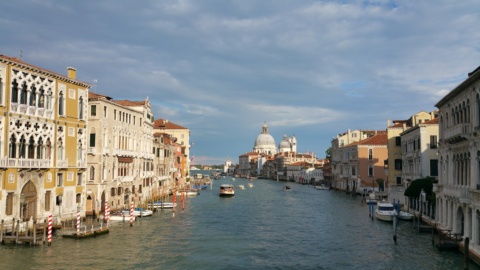
Venice deserves its own note. It is genuinely one of the most beautiful places in the world and also, in summer, one of the most overcrowded. The crowds are a logistical reality worth planning around — going in shoulder season (April, May, October) makes an enormous difference in both the experience and the cost of accommodation. Venice is also a city that genuinely rewards getting lost, which is something solo travellers are better positioned to do than those with a group to keep together. Put the map away occasionally. The bridges and calli will eventually lead you somewhere interesting.
The language barrier is more noticeable in smaller towns and rural areas than in major tourist cities. A handful of Italian phrases go a long way — Italians tend to respond warmly to any effort, however imperfect.
8. Costa Rica
Costa Rica requires more planning than anywhere else on this list, and the planning is worth it.
Independent travel here doesn’t have the convenient infrastructure of Europe or even Southeast Asia. Public buses exist and are affordable but run on schedules that don’t always align with where you want to go or when. Getting between destinations — particularly in more rural areas like Guanacaste, the Nicoya Peninsula, or the Caribbean coast — often means figuring out shared shuttles, private transfers, or rental cars. None of these are difficult exactly, but none of them have the reassuring predictability of buying a train ticket and knowing exactly how it will unfold.
Roads in Costa Rica are an adventure in themselves. Some are well-maintained. Others are unpaved, potholed, or creek-crossingly rough in ways that are not always apparent from a map. If you’re renting a car — which is often the most practical option for getting to more remote areas — a 4WD vehicle is worth the additional cost and checking road conditions before you drive somewhere is worth the five minutes it takes.
Wildlife and nature are the main draws and they deliver fully. Howler monkeys at dawn. Sea turtles nesting on the beach. Sloths moving through the trees with their particular unhurried confidence. The country has protected around a quarter of its land as national parks and reserves, and it shows. Guanacaste is drier and sunnier than the Pacific south or the Caribbean coast — good for beach travel, good for water sports, less good if you want dense jungle.
The pura vida attitude is real and worth understanding before you arrive. It’s an approach to life — unhurried, genuinely warm, unconcerned with stress — rather than just a phrase on a souvenir magnet. Travel here goes better when you adopt some of it yourself.
9. Mexico
Mexico sits at the bottom of this list not as a discouragement but as an honest placement. It rewards informed, attentive travellers and is less forgiving of those who arrive without having thought about it.
Research before you go matters here more than anywhere else on this list. Knowing which areas of your destination city are fine to walk at night and which ones to avoid. Using registered taxis or Uber rather than unmarked cars, which is a straightforward habit to develop. Being aware of your surroundings in busy markets and on crowded streets. Keeping valuables out of sight. None of this is alarmist — these are practical habits that the majority of solo travellers to Mexico adopt naturally and move through the country without incident.
Puerto Vallarta is one of the more accessible entry points for first-time visitors to Mexico. It has a well-developed tourist infrastructure, a walkable old town that feels genuinely local rather than manufactured for visitors, and a coastal setting that’s beautiful without requiring much effort to appreciate. The Zona Romántica — the neighbourhood south of the river — has the best street food, the liveliest atmosphere, and the most interesting mix of locals and travellers. The malecón along the waterfront is genuinely pleasant to walk at any hour.
Spanish matters more in Mexico than in some other Spanish-speaking countries simply because English is less widely spoken outside the direct tourist areas. Even basic Spanish — enough to order food, ask for directions, negotiate a price — transforms the experience and changes how people respond to you. Duolingo for two weeks before you leave is not wasted time.
The food is the thing that pulls people back. Not resort food, not tourist-menu food — the street tacos from a stand that’s been there for twenty years, the market lunches that cost almost nothing and taste like everything, the mole and the ceviche and the tamales from someone’s kitchen window. Eating well in Mexico is cheap, easy, and one of the genuine pleasures of being there. It requires eating where locals eat, which requires a small amount of willingness to wander off the main drag, but the bar for that in Puerto Vallarta is very low.
The honest bottom line
Looking at this list, the pattern that emerges is that the countries at the top are the ones that remove friction. Japan, Germany, Switzerland — they do a lot of the work for you. Everything is organized, everything is legible, everything runs. And those are wonderful places to travel.
But the countries at the bottom are the ones that ask more of you. More preparation, more flexibility, more willingness to sit with uncertainty when the plan changes — and it will change. What they give back for that effort tends to be more vivid, more surprising, and harder to forget.
Use this list to prepare, not to eliminate. The best trip you’ll ever take might be to the country at the bottom of someone else’s easy list.
Which country surprised you most — easier or harder than you expected? Leave it in the comments.