


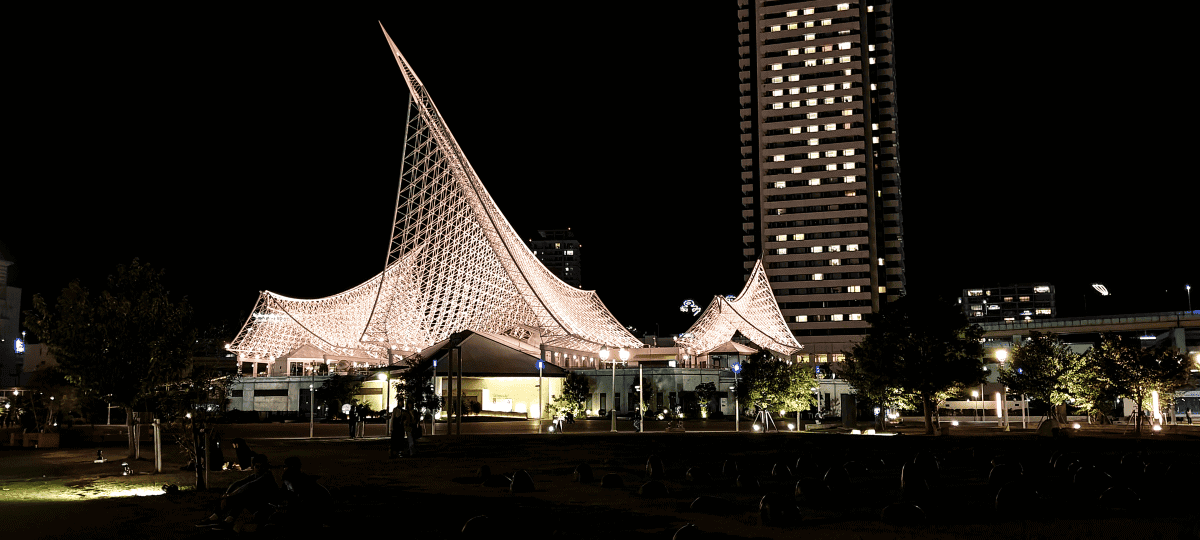
Honestly, Kobe had been on my list for a long time.
While most people were busy stacking their Japan itineraries with the obvious hits — Tokyo for the chaos, Kyoto for the temples, Nara for the deer — I had my eye on Kobe. Not for any particularly cultured reason, either. I wanted the beef. I’d heard about Kobe beef for years, that legendary, almost absurdly well-marbled steak that gets name-dropped at high-end restaurants around the world, and I’d long suspected that eating it anywhere other than Kobe itself was probably a pale imitation of the real thing. So when I finally booked my Japan trip, Kobe wasn’t an afterthought — it was a destination.
What I didn’t expect was how much the city itself would stick with me, long after the last bite.
A City That Doesn’t Feel Like It’s Performing for Tourists
One of the first things you notice in Kobe is how lived-in it feels. It’s not a museum city. It’s not a theme park version of Japan. People are going about their lives — grabbing coffee, walking dogs, commuting — and you get to move through that world as a visitor rather than having the tourist track laid out for you like a conveyor belt.
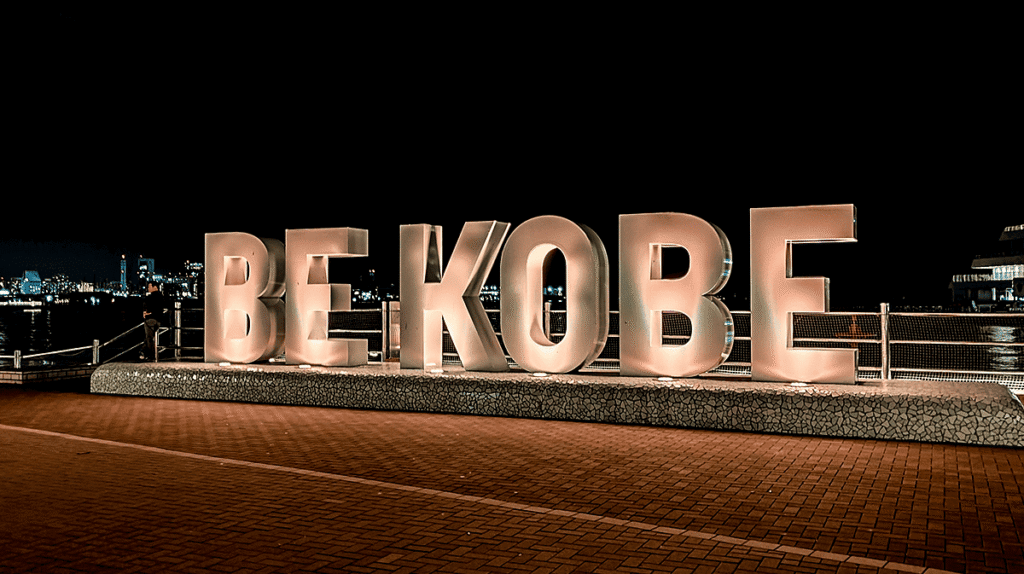
That’s not a knock on Tokyo or Kyoto, both of which I love. But Kobe has a texture to it that’s harder to manufacture. Maybe it’s the city’s long history as a port town and international trading hub, which gave it a cosmopolitan confidence early on. Kobe was one of the first Japanese cities to open to foreign trade in the 19th century, and you can still feel traces of that in the architecture, the food, and the general attitude of the place.
Founded officially on April 1, 1889, the city takes its name from “kanbe,” an ancient term rooted in the area’s history as a place of religious significance. Centuries before it became a modern port city, this stretch of coast between the mountains and the sea was already considered special. That geographic tension — mountains behind you, ocean in front — never really goes away, and it gives the city a natural drama that no amount of urban planning could manufacture.
The Food: Yes, the Beef Is Real, and Yes, It’s Worth Every Penny
Okay. Let’s get to the reason I came.
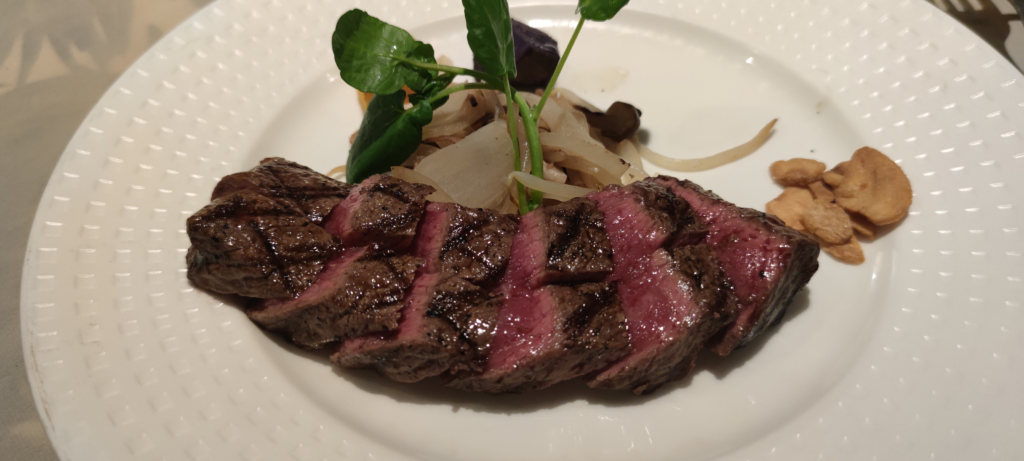
I know Kobe beef has become a bit of a punchline in food circles — overpriced, overhyped, available at every mid-range steakhouse in the world that wants to charge an extra twenty dollars for something that may or may not have any real connection to actual Kobe. That skepticism is fair. But real Kobe beef, eaten in Kobe, at a proper Kobe Beef restaurant, is something else entirely. And I say that as someone who went in with very high expectations and still came out surprised.
The marbling is unlike anything I’d seen before. It looks almost artificial, like someone drew fat through the meat with a very fine pen. When it hits the hot iron griddle in front of you, it doesn’t so much sear as it melts — the fat dissolving into the meat, the whole thing becoming something tender and rich and completely unlike regular beef. I ate very slowly. I didn’t want it to end.
I’m not typically someone who gets emotional about food, but that meal made a case for itself. There’s a reason people travel specifically for this. The texture, the flavour, the sheer quality of it — it delivered on every bit of the hype I’d carried with me for years.
A tip: make sure wherever you go is actually serving certified Kobe beef. Look for the chrysanthemum seal, which is the official mark of authenticity. There are teppanyaki spots at various price points throughout the city, but don’t cut corners on this one. You came this far — do it properly.
Beyond the beef, Kobe’s food scene reflects its multicultural history in genuinely interesting ways. There’s excellent Chinese food in Nankinmachi, the city’s compact and lively Chinatown. Western-style bakeries that have been operating for over a century sit quietly on side streets, a remnant of the foreign settlement period. The seafood, given Kobe’s position on the Seto Inland Sea, is exceptional. And the sake produced in the nearby Nada district — made with pure mountain water and quality local rice — has been renowned across Japan for centuries. There’s no shortage of reasons to eat and drink well here.
Meriken Park and the Weight of What Happened Here
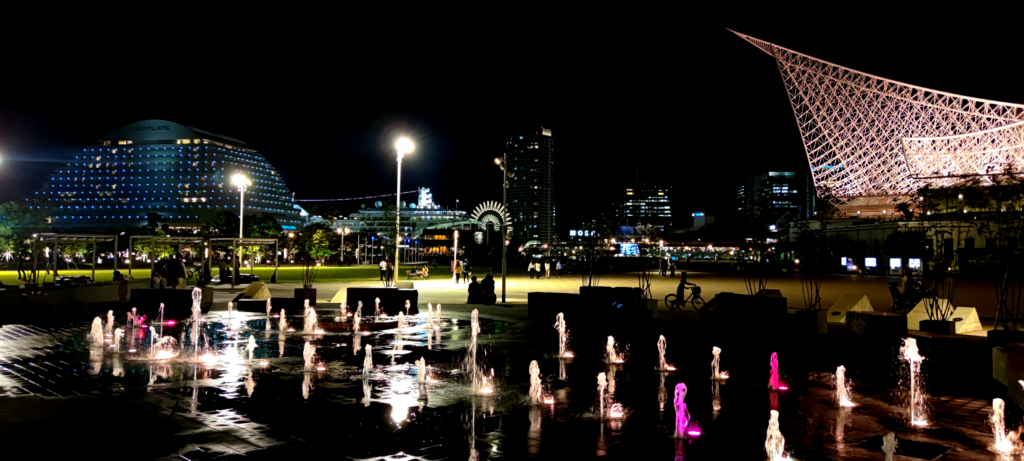
After dinner, I walked down to the waterfront. Meriken Park sits right on the edge of the harbour, and at night, with the Kobe Port Tower lit up red against the dark water, it’s a genuinely beautiful place to be. There’s a breeziness to it — people out for evening strolls, the smell of the sea, the quiet hum of a city winding down.
But there’s something else at Meriken Park that stops you in your tracks, if you’re paying attention.
On January 17, 1995, at 5:46 in the morning, a massive earthquake struck the Kobe region. The Great Hanshin-Awaji Earthquake registered 6.9 on the Richter scale. Over 6,400 people died. Entire neighbourhoods were reduced to rubble. The elevated Hanshin Expressway, one of the icons of postwar Japanese infrastructure, tipped onto its side in sections.
At Meriken Park, a section of the original damaged pier has been preserved exactly as it was immediately after the quake. Cracked concrete. Tilted lampposts. The earth still visibly buckled and broken, frozen in the moment of destruction. It sits right there on the waterfront, next to the pleasant evening strollers and the food vendors and the glowing tower, and it asks you to hold two things at once: the city as it is now, and the city as it was in those hours.
It’s a sobering and quietly powerful thing to stand in front of. What followed the earthquake was one of the most remarkable urban recoveries in modern history. Within a decade, the city had essentially rebuilt itself — not just the buildings, but the community. The experience seemed to give Kobe a kind of resilience and warmth that residents are quietly proud of, and that you can feel even as a visitor passing through.
Standing at that preserved pier in the evening, the harbour lights reflecting off the water behind me, I found myself thinking about what it actually means for a place to rebuild — not just physically, but in terms of spirit and identity. Kobe clearly figured that out.
A City Worth More Than a Stopover
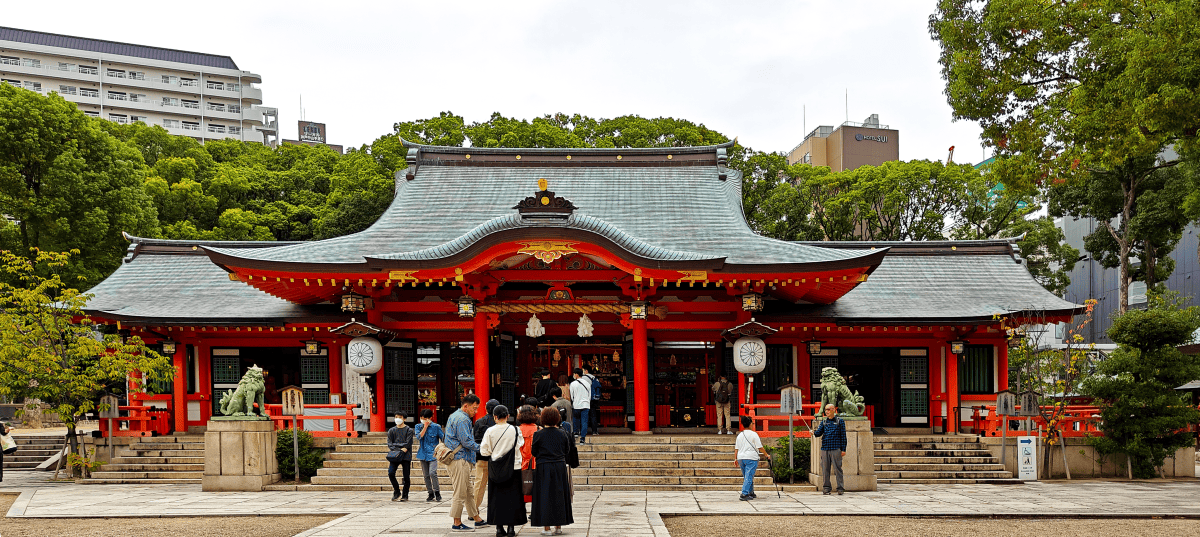
Here’s the thing about Kobe: it won’t give you the sensory overwhelm of Tokyo, and it won’t give you the ancient temple density of Kyoto. What it gives you instead is something harder to find — a city that feels authentic, layered, and completely itself.
It has a coastline and a mountain range framing it on either side. It has some of the best food in a country already famous for its food. It has architecture that tells a genuinely unusual story about Japan’s relationship with the rest of the world. And it has a history of tragedy and rebuilding that gives it a kind of depth you can feel without necessarily being able to articulate.
I came for the beef — and the beef absolutely delivered. But I’m leaving with a much fuller picture of a city that deserves far more attention than it gets. Kobe isn’t a consolation prize for people who’ve already done Tokyo and Kyoto. It’s a destination in its own right, with its own personality and its own reasons to come back.
Two or three days is enough to get a real feel for the place, though I’d genuinely recommend building in more if your schedule allows. It sits about 30 minutes from Osaka by train, so it fits naturally into most western Japan itineraries without much disruption.
For accommodation, I stayed at the Kobe Motomachi Tokyu REI Hotel and would recommend it without hesitation. The location is genuinely excellent — Motomachi is one of the most central and walkable parts of the city, so getting around on foot was easy from day one. The hotel itself was clean, comfortable, and well-run, with that quiet efficiency that the best Japanese hotels seem to pull off effortlessly. Nothing flashy, but everything you need and nothing out of place. It’s the kind of stay where you don’t think about the hotel much at all — which, honestly, is the highest compliment.
Go. Eat the beef. Walk the waterfront at night. Stand at that cracked pier and let the city tell you its story.
You won’t regret making the trip.
Kobe is located in Hyogo Prefecture, about 30 minutes from Osaka by train. The best time to visit is spring (March–May) or autumn (September–November) for mild weather and comfortable sightseeing.