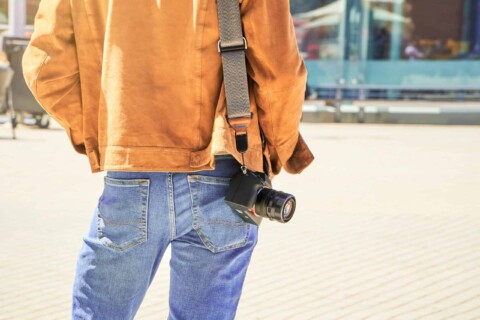




Let’s be real for a second: the idea of solo travel sounds thrilling right up until the moment you actually have to plan it. Then suddenly your browser has forty-seven tabs open, your notes app is a chaotic mess of half-formed ideas, and you’re lying in bed at 1am wondering if you even own a valid passport.
Deep breath. This is completely normal, and it’s exactly what this guide is here to fix.
2026 is genuinely one of the best times to set off on your own — not in a fluffy, motivational-poster kind of way, but in a real, practical sense. The global tourism infrastructure has quietly shifted in favor of solo travelers. Train booking across Europe and Asia has never been simpler. Apps can translate a menu, hail a ride, and download offline maps for an entire country in the time it takes to finish a coffee. Online communities mean you’re never actually alone, even when you’re alone. The world has sort of figured out that a whole lot of people want to travel by themselves, and it’s been quietly building the roads to make that easier.
So let’s actually plan this thing.
Start With Your Head, Not Your Flight Search
Before you open a single booking website, you need to get clear on one thing: why do you want to do this?
Not in a therapy-session kind of way. More practically — knowing what you’re after shapes every decision that follows. If you want total decompression, a week on a slow train through Portugal is going to serve you better than a packed five-city itinerary. If you’re craving connection and new people, a social hostel in Barcelona will do more for you than a secluded Airbnb with great Wi-Fi. If you want nature and your own company, Seattle is your launchpad to some of the most spectacular hiking in North America.
There’s no wrong answer. There’s just your answer, and it’s worth knowing it before you spend a dollar.
The other mindset thing worth addressing is fear — specifically the free-floating anxiety that tends to attach itself to solo travel plans. Feeling nervous is not a sign that you shouldn’t go. It’s a sign that you’re doing something that actually matters to you. Every seasoned solo traveler started exactly where you are, equally terrified and excited, and the fear shrank almost immediately once the trip was underway. Acknowledge it, pack it in your carry-on, and bring it along. It won’t last.
Build a Budget That Actually Reflects Reality
This is where a lot of first-time solo travelers get tripped up, and it comes down to one sneaky little thing called the solo supplement.
Hotels, cruise cabins, and certain tour operators price their offerings for two people sharing a room. When you travel alone, you still pay for the whole room. That markup — sometimes 20%, sometimes double the per-person rate — is the solo supplement, and ignoring it is how people blow their budgets before they’ve left the airport.
The fix is simple: factor it in from the start. Decide early whether you’re a hostel person, a budget hotel person, or somewhere in between. Hostels typically have private rooms these days that cost a fraction of comparable hotels, and the communal spaces are genuinely great for meeting people if you want them to be. Boutique hotels offer more privacy and often a better sense of a neighborhood. Neither is wrong — it just depends on what you’re optimizing for.
Beyond accommodation, the places people forget to budget for are travel insurance (non-negotiable — just buy it, immediately after booking your flights), visa fees if applicable, day-to-day transport within your destination, and a buffer of around 10 to 15 percent for the unpredictable stuff. A missed train. A pharmacy run. A spontaneous boat tour you couldn’t say no to.
That buffer isn’t pessimism. It’s what keeps a small inconvenience from becoming a stressful catastrophe.
Pick a Destination That Sets You Up to Succeed
For a first solo trip, the goal is to build confidence, not to push every possible limit simultaneously. That means choosing somewhere with reliable public transport, a reasonable degree of safety, and enough English-language infrastructure that you’re not white-knuckling it through basic tasks.
Lisbon is the name that comes up over and over again in solo travel circles, and it earns the reputation. It’s affordable by Western European standards, the locals are genuinely warm, the public transport is solid, and most people in the service industry speak English. The city is compact enough to explore without feeling lost and interesting enough that you’ll never be bored. If you have a few extra days, Porto — about three hours north by train — offers a similar vibe at an even smaller scale, with a jaw-dropping riverfront and some of the best food in Portugal.
Barcelona is a step up in terms of stimulation — busier, louder, more chaotic in the best way. It’s a city that rewards wandering. The architecture is genuinely unlike anywhere else on earth, the beaches are right there, and between walking tours, cooking classes, and tapas crawls, you’ll meet people whether you try to or not. The main caveat is petty theft: Barcelona’s tourist areas are a hotspot for pickpocketing, so keep your bag zipped, your phone in your front pocket, and your attention on your surroundings rather than your screen.
For travelers who want to skip the language barrier entirely, Seattle is an underrated first solo destination. It’s walkable, well-organized, endlessly coffee-fueled, and sits at the edge of some extraordinary Pacific Northwest wilderness. The cost of living is higher than Europe, but you get ease and access in return.
One thing worth noting: safety is not a universal experience. What feels safe and welcoming varies based on who you are and how you move through the world. Communities like Traveling Black Women and content creators like Kamryn Kinlow and Danielle Desir have built genuinely invaluable resources for travelers who want perspectives that reflect their own experience — not just generic destination ratings. Seek those out. They’ll give you a more accurate picture than any travel ranking ever will.
The Practical Stuff: How to Actually Book This
Once you know where you’re going, the booking phase is mostly about sequencing things in the right order so nothing falls through the cracks.
Start with flights, and buy travel insurance the same day — not later, now. Use incognito mode when searching for flights, track prices over a few days if your dates are flexible, and don’t agonize over finding the absolute cheapest option to the point of paralysis. Good enough is good enough.
For accommodation, book your first three nights in advance and leave the rest open. Landing in an unfamiliar city with nowhere to sleep is stressful; landing with a confirmed bed and a plan for the first few days is energizing. Once you’re on the ground and have your bearings, you can figure out the rest as you go.
For getting around within your destination — especially if you’re doing multiple cities in Europe or Asia — trains are almost always the move. They’re more comfortable than buses, more scenic than flying, and dramatically better for the environment than short-haul flights. Services like Rail Ninja make booking cross-border rail routes much less confusing than trying to navigate each country’s individual train website.
Learn a handful of phrases in the local language before you go. Not a whole curriculum — just hello, thank you, excuse me, and do you speak English? The effort is noticed and appreciated almost everywhere, and it changes the energy of interactions in ways that are hard to quantify but immediately felt.
Safety Without the Paranoia
The question “is solo travel safe?” gets asked a lot, and the honest answer is: it depends on how you approach it.
The foundational habit is simple: share your itinerary with someone at home. Not just “I’m going to Barcelona” — actual details. Flight numbers, accommodation addresses, the name of the hostel, rough plans for each day. Update them when things change. A quick daily text saying you’re fine takes thirty seconds and gives someone back home the information they’d need if something ever went wrong.
Keep digital copies of your passport, insurance documents, and any visas stored somewhere secure and accessible — encrypted cloud storage works well. Keep physical copies separate from the originals. If your bag gets stolen, you want to be able to prove who you are without your entire documentation situation collapsing.
Do a little research on the common scams in your specific destination. These are usually not elaborate. They tend to be simple and rely on a moment of distraction or social pressure. Knowing they exist in advance means you won’t be caught off guard.
And then trust your gut. This is the piece of advice that sounds the most vague and is actually the most important. If a situation feels wrong, leave. If someone is making you uncomfortable, you don’t owe them an explanation. Your instincts exist for a reason, and they’re usually right.
For women traveling solo, a personal safety alarm is worth throwing in your bag — small, cheap, and hopefully never needed. Avoid sharing real-time location information on social media until after you’ve left the area. Choose accommodation with secure entry and at least some kind of reception presence.
You Will Not Be Lonely (Or If You Are, It Won’t Last Long)
Loneliness is probably the most common fear attached to solo travel, and it’s also the one that dissolves fastest once you’re actually out there.
Solo travel puts you in a fundamentally different social position than traveling with a group. When you’re alone, you’re approachable. You make eye contact with strangers. You accept invitations you’d decline if you had someone to retreat to. The conditions for connection are basically perfect.
The practical moves: sign up for a free walking tour on your first or second day (they’re excellent, they’re everywhere, and they’re one of the easiest ways to meet other travelers in one go), find a cooking class or language exchange if you’re staying somewhere for more than a few days, and stay in a hostel at least once even if you book a private room. The common areas do their job.
Online communities are also genuinely useful here — not just for logistics, but for the reassurance of being around people who get it. Platforms like Threads have active solo travel communities where you can ask hyper-specific questions and get real answers from people who’ve been there recently. You can often find meetups in cities you’re visiting or connect with other travelers heading to the same destination. It’s worth doing before you leave, not just after you land.
Your Timeline for Making This Happen
If you want to keep yourself from getting overwhelmed, work backwards from your travel dates and break the planning into three phases.
Three months out is for the foundations: book your time off, pick your destination, check your passport validity, and get clear on your budget. This phase is about making the trip real rather than just a nice idea.
One to two months out is for the logistics: flights, insurance, accommodation for your first few nights, and any major inter-city transport you want to secure in advance. Start learning a few key phrases in the local language. Download the apps you’ll need — offline maps, translation, whatever ride-share or transport apps are relevant to your destination.
One to two weeks out is for the final details: confirm all your reservations, create a proper copy of your itinerary and share it with your emergency contact, set up a check-in schedule, and pack. The packing rule that saves every solo traveler eventual grief: if you can’t comfortably carry your bag up a flight of stairs by yourself, it’s too heavy. You are your own porter, every single time.
One Last Thing
Solo travel has a way of being both exactly what you expect and completely nothing like what you expected, simultaneously. You’ll handle things you didn’t think you could handle. You’ll have conversations you wouldn’t have had otherwise. You’ll make decisions based purely on what you want, without negotiation or compromise, and discover that turns out to feel extraordinary.
The planning is just the doorway. Go open it.