


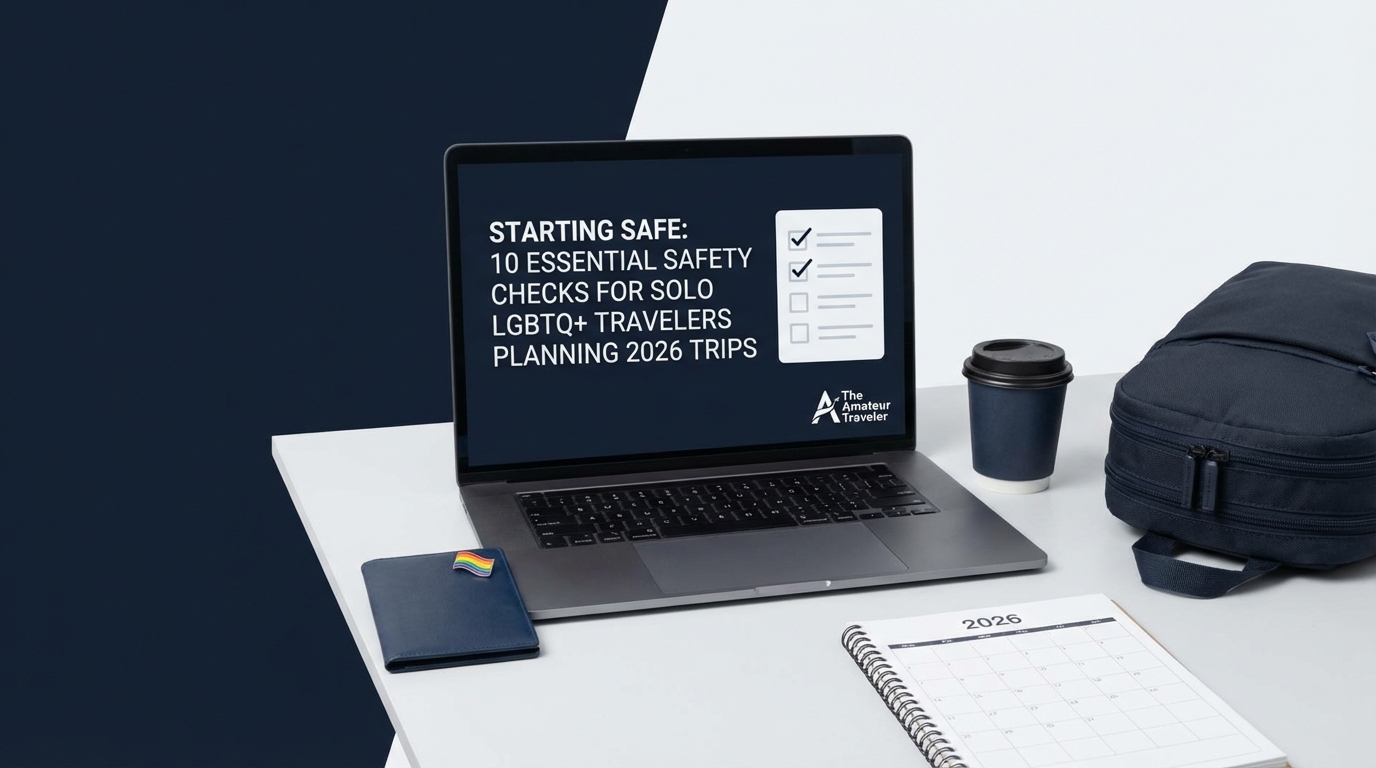
Starting Safe: 10 LGBTQ+ Solo Travel Checks
Table of Contents
- Key Takeaways for Safe Solo Travel Planning
- Key Takeaways for Solo LGBTQ+ Travelers
- Phase 1: Deep Destination Research and Legal Protections
- Phase 2: Choosing the Right Location and Vetting Resources
- Phase 3: Practical Planning and Digital Security
- Phase 4: On-the-Ground Awareness and Community
- Your Journey Starts Now: Embracing Inclusive Tourism in 2026
- Frequently Asked Questions
Planning a solo trip in 2026 is incredibly exciting. The world is waiting for you, and solo travel is one of the most rewarding adventures you can undertake.
However, we know that for many Queer travellers, planning requires an extra layer of diligence and research. Finding truly Safe LGBTQ cities means going beyond standard tourist guides.
It is about more than just finding the best flight deals. You need to verify if the destination offers true Legal protections, strong Anti-discrimination laws, and a genuinely Welcoming environment.
This detailed research is critical to maximizing your Travel safety. We aim to provide Verified travel advice specifically for those seeking Top LGBTQ destinations 2026.
This guide is here to simplify that essential vetting process. We break down the ten most important safety checks you must perform before booking your next solo adventure, ensuring your trip is simple, fun, and above all, safe.
Key Takeaways for Safe Solo Travel Planning
- Always prioritize destinations with Inclusive legal frameworks before booking.
- Cross-reference information using international sources like the Government of Canada and Official tourism agencies.
- Focus on LGBTQ friendly cities known for strong Community culture and Inclusive tourism.
- Verify destination safety using recent Government travel advisories.
Expert Insight
“Travel safety for LGBTQ+ individuals requires moving beyond general advice. It demands comprehensive pre-trip intelligence that scrutinizes a destination’s legal framework, social attitudes, and specific community risks to ensure a genuinely safe and inclusive experience.”
Key Takeaways for Solo LGBTQ+ Travelers
As you begin planning your 2026 adventure, keep these essential safety strategies top of mind. For Queer travellers, preparation is the key to finding truly Safe LGBTQ cities and ensuring a seamless, confidence-boosting experience.
- Prioritize destinations that offer explicit Anti-discrimination laws and robust Legal protections. Look for destinations with established Inclusive legal frameworks, not just popular opinion, for true peace of mind.
- Always check up-to-date, Verified travel advice from official sources, such as the Government of Canada (or your home country’s official tourism agencies), before finalizing your departure plans.
- Go beyond standard guides. Use multiple sources, including specialized LGBTQ travel blogs like those from Nomadic Boys, to assess the local Community culture and identify genuinely Welcoming environments.
- Remember that finding the Top LGBTQ destinations 2026 requires researching the specific legal status of LGBTQ+ individuals, not just relying on tourist brochures promoting general Inclusive tourism.
- Ensure basic Travel safety by securing your digital footprint. Use trusted browsers like Chrome or Firefox when managing sensitive travel documents while abroad.
Expert Insight
“Achieving true peace of mind for LGBTQ+ travel goes beyond tourist brochures; it demands proactive research into the specific legal status of LGBTQ+ individuals, prioritizing destinations with robust anti-discrimination laws and inclusive legal frameworks.”
Phase 1: Deep Destination Research and Legal Protections
You are excited to find the Top LGBTQ destinations 2026, but preparation is the core of solo travel success. To ensure your trip is truly restorative and fun, you must move beyond scenic photos and look for hard facts.
This initial, deep destination research is what separates a great experience from a stressful one. Your goal here is to identify truly Safe LGBTQ cities by verifying their legal status and social acceptance.
Safety Check 1: Verify the Legal Status of LGBTQ+ Identity
This is the absolute priority for every Queer traveller. A country might market itself heavily with promises of Inclusive tourism, but local laws provide the real safety metrics.
You must know if same-sex relationships are fully decriminalized and recognized.
More importantly, look for explicit Anti-discrimination laws regarding employment, housing, and public accommodation. These explicit rules offer tangible Legal protections that social tolerance simply cannot replace.
In short: A destination with strong Inclusive legal frameworks is inherently safer and more reliable for solo travel than one relying only on vague social acceptance.
Safety Check 2: Consult Government Travel Advisories
When assessing potential LGBTQ travel destinations, official sources provide non-biased, critical information. Do not skip this step, tourist brochures will not tell you everything.
The Travel Advice and Advisories published by the Government of Canada, the U.S. State Department, or similar Official tourism agencies in your home country, are excellent resources for Verified travel advice.
These Government travel advisories often contain specific sections detailing risks for Queer travellers, including local laws related to public displays of affection, gender expression, or the importation of specific materials.
This information is critical for managing your personal Travel safety profile.
“Official government advisories often give the starkest reality check on a destination’s safety profile, detailing specific legal risks and complexities that commercial tourist brochures omit. This is foundational safety planning.”
Safety Check 3: Check Local Social and Community Culture
Laws are essential, but street-level acceptance and the vibe of a place are equally important for overall comfort. You need to know if the destination offers genuinely Welcoming environments.
You want to find places with a thriving, visible Community culture, even if it is small. Visibility usually indicates resilience and support.
Research local LGBTQ+ centers, bars, or community events. If the community is open and active, it suggests a strong local support network.
Look for destination reviews shared by other Queer travellers on platforms like specialized travel blogs (such as those run by Nomadic Boys or insights shared by people like Nick Guillory) or large group forums on Facebook. These personal accounts provide invaluable, unfiltered perspective on daily life.
If you are struggling to find evidence of a local community, that location might not be one of the Top LGBTQ destinations 2026 for solo travelers seeking visibility and ease.
Expert Insight
“Policies and legal acceptance are only part of the equation; LGBTQ+ travelers must deeply research local social attitudes and community visibility, recognizing that their unique identity will dictate their actual street-level experience and comfort.”
Phase 2: Choosing the Right Location and Vetting Resources
Once you’ve established the foundational legal protections in your chosen region (Phase 1), the fun begins: narrowing down your options to truly welcoming environments.
This phase is dedicated to vetting real-world feedback. You are moving past the glossy brochures to find the best Safe LGBTQ cities and Top LGBTQ destinations 2026 for Queer travellers.
Safety Check 4: Cross-Reference Multiple Safety Indexes
Do not rely on a single, glossy list claiming the ‘Best’ LGBTQ travel destinations. These lists can sometimes be influenced by marketing, not actual community culture.
Instead, look for verified travel advice by cross-referencing indexes that factor in everything from legal rights to public opinion polls and inclusive legal frameworks.
Compare lists published by reputable sources such as Travel and Tour World, TBO Academy, or established LGBTQ+ travel bloggers like the Nomadic Boys.
Look for destinations that consistently rank high across various metrics. This sustained ranking indicates genuine acceptance and Welcoming environments, not just good anti-discrimination laws on paper.
Safety Check 5: Establish Emergency Local Contact Points
Solo travel is simplified when you know exactly who to call if you encounter a challenge. This is a core component of proactive Travel safety.
Before leaving, you must identify and store critical contact information.
- Your home country’s embassy or consulate. For example, citizens should review the Government of Canada’s official tourism agencies advice for consular services.
- Local LGBTQ+ health clinics or established community centers. These groups often provide the most accurate, ground-level support for Queer travellers.
- A trusted friend or family member who has committed to daily check-ins.
Having this information saved digitally (on your phone and cloud) and printed out (for backup) is non-negotiable for excellent planning.
Safety Check 6: Vetting Community Culture and Local Buzz
Legal protections are one thing, but community culture dictates your day-to-day experience. This check moves beyond official government travel advisories.
Look for real-time feedback from others who have recently visited the Safe LGBTQ cities you are considering.
Search local Facebook groups or Reddit forums associated with your destination. Pay attention to conversations regarding specific neighborhoods, bars, or activities.
Are people discussing inclusive tourism and welcoming environments, or are they sharing warnings about specific areas or interactions? This qualitative data is often the most important for solo Queer travellers seeking LGBTQ friendly cities.
Phase 3: Practical Planning and Digital Security
You have done the hard work of researching locations, checking the legal protections, and confirming that your desired destination is one of the top LGBTQ travel destinations for 2026.
Now, we move into the practical elements that ensure your day-to-day experience is seamless and safe.
Safety is not just about the destination; it is also about how you manage your resources and digital footprint while traveling.
Safety Check 6: Vetting Accommodation Choices
Where you sleep is crucial. For Solo LGBTQ+ travelers, finding accommodation that provides genuinely welcoming environments can significantly reduce stress and enhance your trip.
Don’t settle for ‘maybe friendly.’ Look specifically for hotels or hosts that are certified LGBTQ+ friendly or mentioned positively in community reviews and forums.
When selecting your base in one of the Safe LGBTQ cities, you should assess the pros and cons of different accommodation types based on safety, budget, and socialization opportunities.
This table helps you weigh your options and decide which setting offers you the maximum sense of travel safety:
| Accommodation Type | Safety Feature for Solo Travelers | Potential Drawback | Best for |
|---|---|---|---|
| Major International Hotel Chain | Strict security protocols, staff training often includes non-discrimination policies. | Can feel impersonal and may lack local flair. | Maximum peace of mind in less familiar areas. |
| Boutique LGBTQ+ Friendly Hotel | Guaranteed Welcoming environments, local community resources available. | Can be expensive and might not exist in all locations. | Connecting with local Community culture. |
| Private Rental (e.g., Airbnb) | Privacy and ability to cook meals, less visibility. | Varies wildly based on host attitude; security is dependent on individual property. | Longer stays in Safe LGBTQ cities. |
Safety Check 7: Secure Your Digital Browsing
As Queer travellers, our research often involves looking up specific community resources, dating apps, or political information that we may not want widely tracked.
Digital security is paramount. Ensure you are using secure browsers and virtual private networks (VPNs), especially when connecting to public Wi-Fi at airports or cafes.
Whether you prefer Chrome, Firefox, Edge, or the browser on your Samsung device, ensure it is updated and has strong privacy settings enabled before you leave home.
This is part of smart, inclusive tourism preparation. Travel advice shared by blogger Nick Guillory highlights the importance of minimizing digital tracking when planning sensitive parts of your itinerary.
Safety Check 8: Plan Your Emergency Communication
Preparation equals peace of mind. Set up a communication plan with your emergency contacts before you leave.
This plan includes establishing a check-in schedule, such as a quick message every evening via your preferred messaging app.
If you fail to check in, your contact needs to know exactly what steps to take. Provide them with your full itinerary, accommodation details, and local emergency numbers.
It is simple preparation that provides immense comfort, ensuring someone always has your back while you explore the LGBTQ friendly cities of the world.
Phase 4: On-the-Ground Awareness and Community
You’ve checked the inclusive legal frameworks and secured your digital footprint. Now that your boots are officially on the ground, travel safety pivots to immediate awareness and integrating into the local scene.
This is where the excitement meets the practical reality of being a solo traveler.
Safety Check 9: Utilize Local LGBTQ+ Resources
Even in the most highly ranked LGBTQ friendly cities, local knowledge is essential power. Never underestimate the value of the Community culture already established there.
Before you leave the airport, check specialized apps or look up the local community center. These organizations are often the best source of Verified travel advice.
They can advise you on specific neighborhoods to avoid, or which establishments are known to be truly Welcoming environments.
Connecting with the local scene immediately helps Queer travellers feel less isolated as a solo explorer.
Safety Check 10: Practice Situational Awareness
Solo travelers must always prioritize situational awareness. This is foundational Travel safety, regardless of your destination.
Keep your valuables secured, avoid walking alone late at night in unfamiliar areas, and be cautious about sharing your exact itinerary with strangers.
While this advice applies universally, for Queer travellers, practicing discretion in public spaces, especially outside of designated Safe LGBTQ cities, can sometimes be a necessary reality.
Remember the goal is not fear, but preparedness. You have done the research; now trust your instincts and enjoy the adventure.
Your Journey Starts Now: Embracing Inclusive Tourism in 2026
The landscape for LGBTQ travel destinations is constantly improving, offering more welcoming environments than ever before.
However, responsible solo travel means recognizing that diligent preparation is key, especially when assessing local Legal protections and anti-discrimination laws.
By completing these ten essential safety checks, you have empowered yourself to choose a trip that perfectly aligns with your comfort level and desires.
You are now equipped to distinguish between highly ranked Safe LGBTQ cities and emerging destinations that require extra planning.
Whether you are seeking the vibrant Community culture found in established LGBTQ friendly cities or venturing into a less-known locale, this verified travel advice makes the journey simple and enjoyable.
This preparation is the foundation of true inclusive tourism.
We encourage all Queer travellers to make 2026 the year they embrace solo travel, fully equipped with the knowledge needed for maximum travel safety and an unforgettable adventure.
Get out there and start exploring!
Frequently Asked Questions
Is solo travel for LGBTQ+ individuals getting safer?
Yes, absolutely! We are seeing significant positive trends. Many destinations are actively promoting Inclusive tourism and recognizing the value of Queer travellers.
However, responsible solo travel means recognizing that safety still requires research into Inclusive legal frameworks and local social attitudes. Acceptance varies drastically, even within the best LGBTQ travel destinations.
How can I find truly Safe LGBTQ cities for 2026?
You should start by prioritizing places with strong Anti-discrimination laws and high scores on global safety indices.
Look beyond official recommendations, though. Seek out Verified travel advice from trusted LGBTQ+ travel bloggers or organizations such as the TBO Academy. They often provide insights into truly Welcoming environments that official sources might miss.
Should I hide my identity when traveling solo?
This is a deeply personal decision based on your comfort level and the destination’s legal environment.
In places with weak Legal protections or explicit anti-LGBTQ+ laws, choosing discretion is often a necessary measure for Travel safety.
However, when traveling to highly LGBTQ friendly cities, you should always feel comfortable and encouraged to be your authentic self.
What role do Government travel advisories play?
Government travel advisories, such as those from the Government of Canada, are crucial. They provide objective, high-level warnings about political stability, crime, and specific risks to minority groups.
They are an essential first step in understanding the formal risks of your chosen LGBTQ travel destinations before you commit time or money in booking.